Introduction
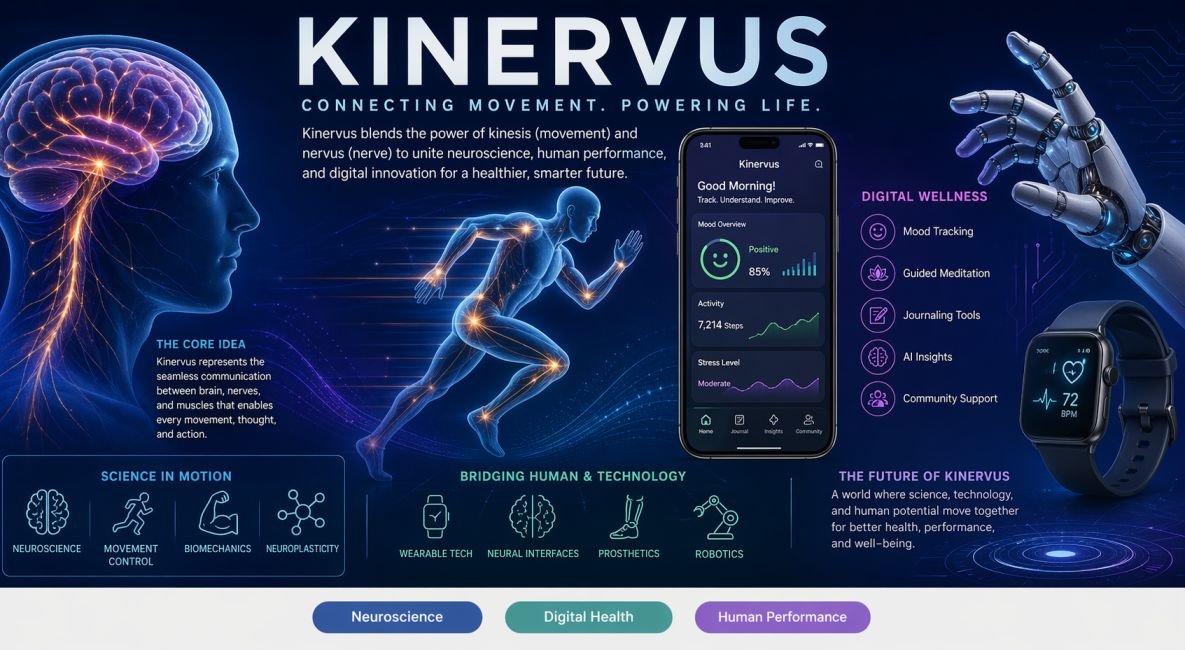
Kinervus is an emerging conceptual term that blends ideas from neuroscience, movement science, and digital innovation into a single evolving identity. It reflects a deeper understanding of how the human brain, nervous system, and physical motion are interconnected, while also representing a modern shift toward technology-driven health and performance solutions. As interest grows in personalized wellness, rehabilitation, and human-machine interaction, Kinervus is increasingly seen as both a scientific concept and a flexible digital identity with wide-ranging applications across physiotherapy, mental wellness, and advanced tech ecosystems.
Quick Info Table
| Aspect | Details |
|---|---|
| Term | Kinervus |
| Core Meaning | Brain-body connection through movement and nerves |
| Origin | Derived from “kinesis” (movement) and “nervus” (nerve) |
| Concept Type | Interdisciplinary (neuroscience + technology + wellness) |
| Key Focus | Neuroplasticity, coordination, human performance |
| Applications | Rehabilitation, physiotherapy, digital health, AI platforms |
| Tech Integration | Wearables, neural interfaces, robotics |
| Industry Use | Healthtech, wellness apps, startup branding |
| Trend Status | Growing in modern digital and scientific spaces |
Meaning and Definition of Kinervus
At its core, Kinervus represents the integration of movement and neural activity, emphasizing how the nervous system controls, adapts, and refines physical motion. The term symbolically captures the dynamic relationship between the brain and muscles, where signals travel through neural pathways to produce coordinated action. In a broader sense, it also defines a philosophy that prioritizes harmony between cognitive processes and physical performance, making it relevant not only in science but also in digital wellness environments.
Origin and Conceptual Foundation
The word Kinervus appears to be constructed from two foundational roots: “kinesis,” meaning movement, and “nervus,” referring to nerves. This combination reflects a deliberate attempt to unify physical and neurological perspectives into one cohesive idea. The concept likely evolved alongside modern interdisciplinary trends, where traditional boundaries between biology, psychology, and technology are becoming increasingly blurred. As a result, Kinervus is not just a term but a framework for understanding human function in a holistic and integrated way.
Neuroscience Connection and Brain-Body Integration
One of the strongest pillars of Kinervus lies in its connection to neuroscience. The brain continuously communicates with the body through electrical and chemical signals, allowing for precise control over movement and behavior. This communication loop is essential for coordination, balance, and adaptability. By emphasizing this connection, Kinervus aligns with modern research that highlights how cognitive processes influence physical outcomes and vice versa, reinforcing the idea that optimal performance depends on seamless brain-body integration.
Kinesis and Nervus: The Core Idea of Coordination
The fusion of movement and nerve function under Kinervus highlights the importance of coordination. Every voluntary and involuntary action relies on a complex network of neural signals that activate muscles in a synchronized manner. This concept extends beyond simple motion, encompassing reaction time, precision, and efficiency. Understanding this relationship helps explain how humans learn new skills, recover from injuries, and enhance performance through targeted training and therapy.
Neuroplasticity and Movement Control
A key scientific principle embedded within Kinervus is neuroplasticity, the brain’s ability to reorganize and adapt over time. This adaptability allows individuals to recover from injuries, develop new motor skills, and improve cognitive function. Movement plays a crucial role in this process, as repeated physical activity strengthens neural pathways. The concept of Kinervus naturally incorporates this idea, positioning movement as both a physical and neurological tool for growth and recovery.
Biomechanics and Human Performance Enhancement
Biomechanics, the study of how the body moves, is another essential component of Kinervus. By analyzing motion patterns and muscle interactions, experts can optimize performance and reduce the risk of injury. This approach is widely used in sports science, rehabilitation, and fitness training. Within the Kinervus framework, biomechanics is not just about physical efficiency but also about how neural control influences movement quality, creating a more comprehensive understanding of human performance.
Rehabilitation Concept and Physiotherapy Link
In rehabilitation and physiotherapy, Kinervus provides a meaningful perspective on recovery. Patients recovering from neurological or musculoskeletal conditions often require therapies that address both movement and neural function. By focusing on the interaction between these systems, therapists can design more effective treatment plans. This concept is particularly valuable in neurological recovery, where restoring communication between the brain and body is essential for regaining independence and functionality.
Pediatric Therapy and Neurological Recovery
The principles behind Kinervus are especially relevant in pediatric therapy, where early intervention can significantly impact development. Children with neurological conditions benefit from therapies that encourage movement while stimulating neural growth. This dual approach supports motor skill development and cognitive function simultaneously. In neurological recovery across all age groups, Kinervus highlights the importance of consistent, targeted movement in rebuilding neural connections.
Mental Wellness Platform and Emotional Tracking
Beyond physical health, Kinervus extends into mental wellness by incorporating tools for emotional awareness and stress management. Digital platforms inspired by this concept often include features like mood tracking, guided meditation, and journaling. These tools help users understand their emotional patterns and develop healthier coping strategies. By linking mental states with physical activity, Kinervus promotes a more balanced and holistic approach to well-being.
AI Insights and Digital Health Applications
Modern interpretations of Kinervus frequently involve artificial intelligence and data-driven insights. Digital health applications can analyze user behavior, track progress, and provide personalized recommendations. This integration allows for more precise and adaptive wellness solutions. AI-powered systems can identify patterns in movement and mood, offering insights that help users improve both physical and mental performance over time.
User Experience and Personalization in Technology
Personalization is a central theme in the Kinervus concept, especially within digital platforms. Users increasingly expect tailored experiences that align with their unique needs and goals. By leveraging data and AI, systems can adapt to individual preferences, creating more engaging and effective solutions. This focus on user experience ensures that Kinervus remains relevant in a competitive digital landscape where customization is key.
Community Support and Technology Integration
Another important aspect of Kinervus is the role of community and connectivity. Digital platforms often include features that allow users to share experiences, seek support, and stay motivated. This sense of community enhances engagement and encourages long-term commitment to health and wellness goals. Technology integration further amplifies this effect by connecting users through shared data and collaborative tools.
Human-Machine Interaction and Wearable Technology
The future of Kinervus is closely tied to advancements in human-machine interaction. Wearable devices can monitor physical activity, track physiological signals, and provide real-time feedback. These technologies bridge the gap between the body and digital systems, enabling more accurate and responsive health solutions. As wearable tech continues to evolve, it will play a crucial role in expanding the practical applications of Kinervus.
Neural Interfaces, Prosthetics, and Robotics Relevance
Cutting-edge developments in neural interfaces and robotics align closely with the principles of Kinervus. These technologies aim to restore or enhance movement by directly connecting the nervous system with external devices. Prosthetics controlled by neural signals and robotic systems that assist with rehabilitation are prime examples. This area represents one of the most advanced and promising applications of the concept, pushing the boundaries of what is possible in human performance and recovery.
Branding Potential, SEO Value, and Digital Identity
From a business perspective, Kinervus holds strong branding potential due to its unique and meaningful composition. It conveys innovation, science, and modernity, making it an attractive choice for startups and digital platforms. Its distinctiveness also enhances SEO value, as it is not widely saturated in search engines. As a digital identity, Kinervus can represent a wide range of services, from healthtech solutions to wellness platforms, giving it significant flexibility and scalability.
Innovation Concept and Future Potential
Looking ahead, Kinervus is positioned as a forward-thinking concept that aligns with emerging trends in health, technology, and human optimization. As research in neuroscience and biomechanics continues to advance, and as digital tools become more sophisticated, the relevance of this concept will likely grow. Its adaptability allows it to evolve alongside new discoveries and innovations, ensuring long-term significance.
Online Trend and Modern Internet Culture
In the context of modern internet culture, Kinervus reflects a growing interest in holistic health and integrated technology. Users are increasingly drawn to concepts that combine science, wellness, and innovation into a single narrative. This trend supports the rise of unique, meaningful terms that can serve as both ideas and brands. As awareness spreads, Kinervus may become more widely recognized in digital and professional communities.
Conclusion
Kinervus stands at the intersection of neuroscience, movement science, and digital innovation, offering a comprehensive framework for understanding and enhancing human performance and well-being. Its emphasis on the connection between the brain and body, combined with its adaptability to modern technology, makes it a powerful and versatile concept. Whether applied in rehabilitation, mental wellness, or advanced tech development, Kinervus represents a forward-looking approach that aligns with the evolving needs of society.
FAQs
What does Kinervus mean?
Kinervus refers to the connection between movement and the nervous system, emphasizing brain-body coordination.
Is Kinervus a scientific term or a brand idea?
It is both a conceptual idea rooted in science and a potential brand name for modern digital platforms.
How is Kinervus related to neuroplasticity?
It highlights how movement helps reshape neural pathways, supporting learning and recovery.
Can Kinervus be used in digital health apps?
Yes, it fits well with apps focused on wellness, tracking, and personalized health insights.
Why is Kinervus gaining attention online?
Its unique blend of science, technology, and wellness aligns with current digital and health trends.