Introduction
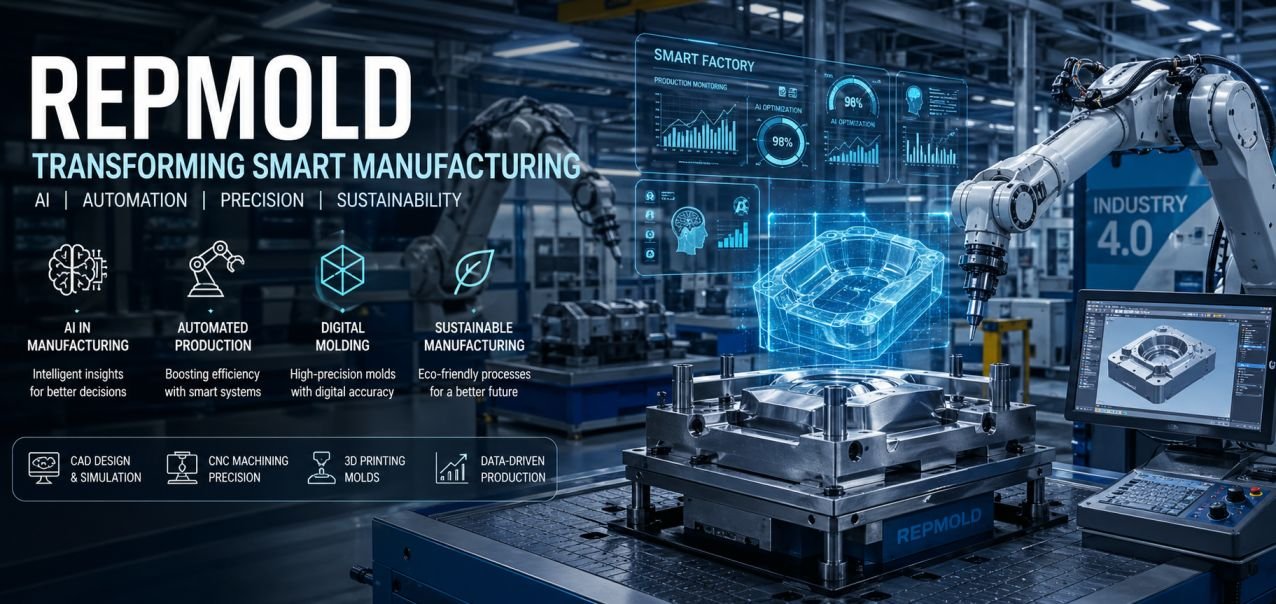
Repmold is emerging as a defining force in modern industry, reshaping how manufacturers design, produce, and scale products in an increasingly competitive global landscape. Built around the principles of smart manufacturing, AI in manufacturing, and digital molding, Repmold represents a shift toward intelligent, automated, and data-driven production systems. As industries adopt Industry 4.0 technologies, the integration of precision engineering, rapid prototyping, and industrial automation is no longer optional but essential. This article explores how Repmold connects advanced technologies like CAD design, 3D printing molds, and CNC machining to create highly efficient, sustainable, and scalable manufacturing ecosystems.
Quick Information About Repmold
| Aspect | Details |
|---|---|
| Core Concept | Advanced mold replication and digital manufacturing system |
| Key Technologies | AI, CAD design, CNC machining, 3D printing |
| Industry Role | Enables automated production and data-driven production |
| Main Benefits | High precision, cost efficiency, scalability |
| Applications | Automotive, aerospace, healthcare, consumer goods |
| Sustainability | Supports eco-friendly manufacturing and reduced waste |
| Innovation Level | Core part of manufacturing technology trends |
Understanding the Core Concept of Repmold
Repmold is not just a single technology but a comprehensive manufacturing approach that combines digital transformation manufacturing with advanced fabrication techniques. At its core, it focuses on creating high-precision molds through intelligent systems that replicate designs with exceptional accuracy. Unlike traditional molding processes, which often rely heavily on manual adjustments, Repmold integrates industrial AI solutions to automate and optimize every stage of production.
This approach allows manufacturers to shift from static production models to adaptive systems capable of responding to real-time data. By leveraging intelligent production systems, Repmold ensures consistent quality while minimizing errors and material waste. The result is a highly efficient production cycle aligned with modern industrial demands.
The Role of AI in Manufacturing Within Repmold
Artificial intelligence plays a central role in enhancing the capabilities of Repmold. Through advanced algorithms and machine learning, manufacturers can analyze production data, predict failures, and optimize workflows. This integration of AI in manufacturing significantly improves decision-making and reduces downtime.
AI-driven systems in Repmold also enable predictive maintenance, ensuring that machinery operates at peak performance. These systems continuously learn from production patterns, allowing for smarter adjustments in automated production environments. As a result, manufacturers benefit from improved reliability and enhanced production efficiency.
Digital Molding and Its Impact on Production Accuracy
Digital molding is a cornerstone of the Repmold framework, allowing for precise replication of complex designs. By using digital models and simulation tools, manufacturers can test and refine molds before physical production begins. This eliminates many of the uncertainties associated with traditional mold-making techniques.
Through integration with CAD design, digital molding ensures that every detail is captured with high accuracy. This leads to the creation of high-precision molds that meet strict industry standards. Additionally, digital validation reduces the need for multiple iterations, saving both time and resources.
Integration of CAD Design and Advanced Fabrication
The use of CAD design in Repmold enables engineers to create detailed, customizable models that can be easily modified and optimized. These designs are directly integrated into production systems, ensuring seamless communication between design and manufacturing stages.
When combined with advanced fabrication technologies such as CNC machining and 3D printing molds, CAD-driven processes allow for faster and more accurate production. This integration eliminates manual errors and enhances overall workflow optimization, making the manufacturing process more streamlined and efficient.
Rapid Prototyping and Scalable Manufacturing
One of the most significant advantages of Repmold is its ability to support rapid prototyping. Manufacturers can quickly create prototypes, test their functionality, and make necessary adjustments before full-scale production begins. This accelerates product development cycles and reduces time-to-market.
In addition to prototyping, Repmold supports scalable manufacturing, enabling companies to increase production without compromising quality. By leveraging data-driven production, manufacturers can adapt to changing demands while maintaining consistent output standards.
Automation and Industrial Efficiency Improvements
Industrial automation is a key driver of efficiency in Repmold systems. Automated machinery and robotics handle repetitive tasks with precision, reducing the likelihood of human error. This leads to more consistent results and higher productivity.
Automation also contributes to improved production efficiency by optimizing resource utilization. With intelligent scheduling and real-time monitoring, manufacturers can ensure that every stage of production operates smoothly. This level of efficiency is essential for maintaining competitiveness in modern industries.
Sustainable and Eco-Friendly Manufacturing Practices
Sustainability is a growing concern in manufacturing, and Repmold addresses this challenge through eco-friendly manufacturing practices. By optimizing material usage and reducing waste, Repmold systems contribute to a more sustainable production process.
Energy-efficient machinery and intelligent resource management further enhance sustainability. These systems align with global efforts to reduce environmental impact while maintaining high production standards. As a result, Repmold supports both economic and environmental goals.
Mold Design Optimization and Precision Engineering
Mold design optimization is another critical aspect of Repmold. Advanced software tools analyze design parameters and suggest improvements to enhance performance and durability. This ensures that molds are not only accurate but also long-lasting.
The integration of precision engineering techniques further improves the quality of molds. By maintaining tight tolerances and consistent specifications, Repmold systems deliver superior results that meet the demands of high-performance industries.
Smart Factories and Intelligent Production Systems
Repmold plays a vital role in the development of smart factories, where interconnected systems work together to optimize production. These factories rely on intelligent production systems to monitor operations, analyze data, and make real-time adjustments.
In such environments, machines communicate with each other to ensure seamless workflows. This level of connectivity enhances workflow optimization and enables manufacturers to achieve higher levels of efficiency and productivity.
Cost-Efficient Production and Competitive Advantage
Cost efficiency is a major benefit of adopting Repmold technologies. By reducing material waste, minimizing errors, and optimizing processes, manufacturers can significantly lower production costs. This makes it easier to remain competitive in global markets.
The use of cost-efficient production methods also allows companies to invest in innovation and expand their capabilities. As a result, Repmold not only improves current operations but also supports long-term growth.
Current Developments and Future of Repmold
Recent advancements in manufacturing technology trends indicate that Repmold will continue to evolve. Innovations in industrial AI solutions, improved 3D printing molds, and enhanced automation systems are driving the next phase of manufacturing transformation.
The future of Repmold lies in deeper integration with digital ecosystems, where data flows seamlessly across all stages of production. This will enable even greater levels of efficiency, customization, and scalability, solidifying Repmold as a cornerstone of modern manufacturing systems.
Conclusion
Repmold represents a transformative approach to manufacturing, combining smart manufacturing, AI in manufacturing, and digital molding into a unified system. By leveraging advanced technologies such as CAD design, CNC machining, and industrial automation, it enables highly efficient, scalable, and sustainable production processes. As industries continue to embrace Industry 4.0, Repmold stands out as a powerful solution for achieving precision, efficiency, and innovation in modern manufacturing.
FAQs
What is Repmold in manufacturing?
Repmold is a digital manufacturing approach that uses AI and automation to create precise and scalable mold production systems.
How does Repmold improve production efficiency?
It enhances production efficiency by automating workflows, reducing errors, and using data-driven insights for optimization.
Is Repmold suitable for all industries?
Yes, it can be applied across industries like automotive, healthcare, and aerospace due to its flexibility and precision.
What technologies are used in Repmold?
It integrates CAD design, CNC machining, 3D printing molds, and industrial AI solutions.
Does Repmold support sustainable manufacturing?
Yes, it promotes eco-friendly manufacturing by reducing waste, optimizing resources, and improving energy efficiency.